Showing posts with label belt replacement. Show all posts

Monday, July 25, 2016

Quick-Link - Gates Emergency V-belt Solution

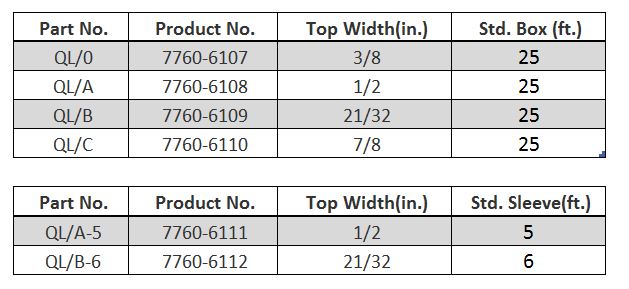
Unplanned drive downtime can be expensive.  However, stocking numerous replacement belt sizes can also be costly.  The Gates Quick-Link V-belt offers an alternative.  It can be quickly assembled by hand into whatever length you need.  

Quick-Link is available in the following sizes:


For a demonstration of the assembly process, watch our latest video:
Quick-Link


Tuesday, August 11, 2015

Replacing Multiple V-belts

Sometimes, only one V-belt fails on a drive that uses multiple V-belts. So, should all of the belts be replaced if only one of them fails, or can just the failed belt be replaced?

The answer is that all V-belts on a multi-groove drive should be replaced at the same time and with belts from a single manufacturer.  Mixing new and old belts or belts from different manufacturers will create a situation where the belts do not evenly share the load. This can lead to premature belt failure and uneven wear of the sheave grooves.

Tuesday, October 25, 2011

Motorcycle Belts

Customers often contact Gates regarding belts for motorcycle applications. Unfortunately, Gates does not sell motorcycle replacement belts directly to aftermarket users. The best method to obtain a proper replacement belt is to go through the dealer network for the particular brand of motorcycle.

Various aftermarket distributors also service the market, and they serve as an alternate source for replacement belts. However, some motorcycle belts sold through the original dealer network may be manufactured with proprietary constructions not available through aftermarket distributors.

The standard Poly Chain® GT® Carbon™ belts sold by Gates general market distributors have the GT tooth style. These belt are not recommended for use with motorcycle sprockets, which are typically designed with the HTD® tooth style.

Aftermarket distributor can typically assist with custom motorcycle applications. However, belts in lengths other than those available from aftermarket distributors may require new tooling at costs in excess of $25K per mold.
Tuesday, March 22, 2011

Selecting the Right Synchronous Replacement Belt

When replacing a synchronous belt on an existing drive, it is important to select a belt that is compatible with the sprockets. Selecting the right belt will optimize the performance and longevity of the drive.

However, the variety of styles available from numerous manufactures increases the difficulty of identifying a replacement belt. To help users select the proper replacement belt, Gates has created the Gates Belt/Sprocket Interchange (http://www.gates.com/index.cfm?location_id=3881). At this site, users can select their sprocket type and determine the best Gates replacement belt.

Thursday, April 8, 2010

When Should Belts be Replaced?

There isn't a standard interval for belt replacement. A well-designed belt drive may last for months or years depending on the specifics of the application. Many factors influence belt life, including actual loads, belt installation tension levels, drive alignment, sheave condition, environmental conditions (chemicals, abrasives, temperatures, humidity, etc.), product manufacturing variations, etc.

The best way to determine a replacement interval for your particular drives is to look at old maintenance records (if they exist). If there seems to be a common point at which belts fail, reducing this number by approximately 30% should provide a good replacement interval.

Periodic inspections of the belt drive (every 3 - 6 months depending on how critical the application is) will also help to determine when the belts need to be replaced. More information on drive inspection is available in the Belt Drive Preventive Maintenance & Safety Manual at
http://www.gates.com/brochure.cfm?brochure=1224&location_id=3288/.

Search This Blog